

10:00 AM - 9:00 PM (Mon - Sat)
10:00 AM - 2:00 PM (Sunday)



Do You Need to Remove Your Extra Teeth (Hyperdontia)?


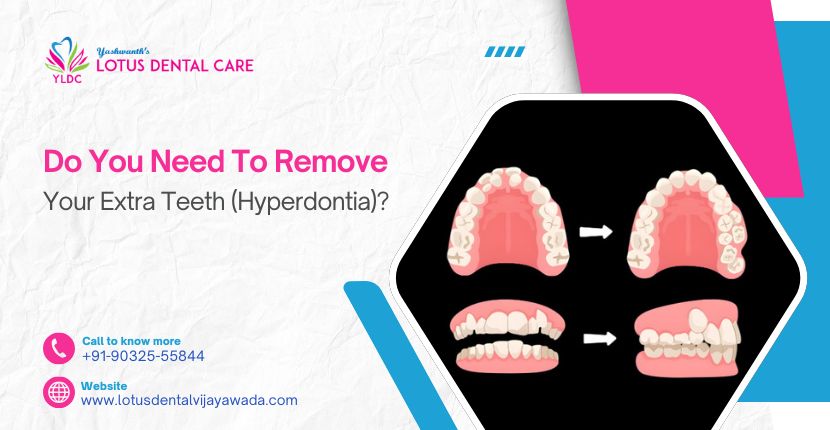
You’re brushing one morning, half awake, staring at your reflection. Everything looks normal. Then your tongue brushes against something odd. A sharp edge where you don’t remember a tooth being. You check again. Still there.
Extra tooth?
It sounds strange, almost impossible. Teeth are supposed to come in a fixed number, right? But for some people, the mouth doesn’t follow the rulebook. And that’s where Hyperdontia enters the picture.
Most people don’t discover extra teeth during dramatic moments. It’s often a routine dental visit, an X-ray taken for something else, or a quiet concern that something feels “off.” And once the word Hyperdontia is mentioned, the next question comes fast.
Do I need to remove it? Or can I just leave it alone?
Let’s talk about that. Calmly. Clearly. Without panic.
What Is Hyperdontia?
Hyperdontia is the presence of extra teeth beyond the usual set. These extra teeth are called supernumerary teeth, but you’ll rarely hear patients use that term. They’re usually described as “extra,” “unexpected,” or “that tooth my dentist showed me on the X-ray.”
These teeth can appear anywhere in the mouth:
- Near the front teeth
- Between molars
- Behind wisdom teeth
- Or completely hidden inside the jawbone
Some people can see them. Others have no idea they exist.
And that’s where confusion begins.
Why Do Extra Teeth Even Form?
There isn’t one single reason. In many cases, Hyperdontia shows up quietly, without any clear trigger.
Some known factors include:
- Genetics, where extra teeth run in families
- Developmental variations during tooth formation
- Certain medical conditions, though most people with extra teeth are otherwise completely healthy
For many patients, there’s no “cause” to point fingers at. It’s just how their teeth developed.
And no, it’s not something you did wrong.
When Hyperdontia Doesn’t Cause Any Trouble
This part surprises people.
Not every extra tooth is a problem.
Sometimes, Hyperdontia exists without pain, crowding, or infection. The extra tooth might be:
- Fully erupted and aligned
- Not interfering with chewing
- Not affecting nearby teeth
In these cases, dentists may recommend observation rather than immediate removal. Regular check-ups and X-rays help track changes over time.
So yes, sometimes the answer is simple.
You don’t need to do anything right now.
When Extra Teeth Start Creating Problems?
Other times, Hyperdontia doesn’t stay quiet.
Extra teeth can cause issues slowly, over the years, without obvious pain at first. Common problems include:
- Crowding that pushes other teeth out of alignment
- Delayed eruption of permanent teeth in children
- Difficulty cleaning, leading to cavities or gum issues
- Pressure on nearby roots
- Jaw discomfort or bite imbalance
Hidden extra teeth can also block orthodontic treatment or interfere with braces planning.
That’s usually when removal becomes part of the conversation.
The “Do I Really Need Surgery?” Question
This is the part that makes people nervous.
Removal doesn’t always mean major surgery. The approach depends on:
- Where the extra tooth is located
- Whether it has erupted or is still buried
- Its impact on surrounding structures
Some extra teeth can be removed like a regular extraction. Others need a more careful surgical approach, especially if they’re close to nerves or sinuses.
At a well-equipped Lotus Dental Care, a dental clinic in Vijayawada, imaging, such as digital X-rays or CBCT scans, helps dentists plan safely and precisely. No guessing. No rushing.
Hyperdontia in Children vs Adults
Extra teeth are often discovered in childhood, especially when permanent teeth don’t erupt on time.
In children, early removal can:
- Allow normal teeth to come in properly
- Reduce the need for complex orthodontics later
- Prevent jaw development issues
In adults, the focus shifts slightly. Dentists look at:
- Long-term oral health
- Bite stability
- Hygiene challenges
Treatment decisions are more personalized at this stage. Age alone doesn’t decide whether removal is needed.
Impact does.
What Happens If You Ignore It?
Not all extra teeth cause emergencies. But ignoring Hyperdontia completely can lead to avoidable problems down the line.
Possible outcomes include:
- Increased crowding over time
- Higher cavity risk due to difficult cleaning areas
- Gum inflammation around awkward tooth positions
- Complications during orthodontic or implant planning
That’s why dentists usually recommend monitoring, even if removal isn’t urgent.
Awareness matters.
How Dentists Decide What’s Best
There’s no blanket rule.
Dentists evaluate:
- Tooth position and angle
- Root development
- Proximity to nerves
- Current symptoms
- Future treatment plans
At a trusted Dental hospital in Vijayawada, like Lotus Dental Care, decisions are made with long-term oral health in mind, not just what’s easiest in the moment.
The goal is to preserve function, comfort, and stability.
Is Removal Painful?
This is one of the most common fears.
Modern dental procedures are far gentler than most people expect. With proper anesthesia and planning, discomfort during the procedure is minimal.
Post-removal soreness is usually manageable with:
- Mild pain medication
- Rest
- Simple aftercare instructions
Most patients return to normal routines sooner than they expect.
Life After Extra Tooth Removal
Once an extra tooth is removed, the mouth often feels more balanced.
Patient's notice:
- Easier cleaning
- Reduced pressure or discomfort
- Better alignment progress if undergoing orthodontics
And mentally, there’s relief too.
No more wondering if that “extra thing” will cause trouble later.
Should You Worry If You’ve Been Diagnosed With Hyperdontia?
Don't worry. But don’t ignore it either.
Hyperdontia doesn’t automatically mean surgery. It means awareness, monitoring, and making informed choices with your dentist.
That’s it.
Some people never need removal. Others benefit greatly from timely intervention.
The key is knowing where you stand.
Frequently Asked Questions
1. Is Hyperdontia a serious dental condition?
Hyperdontia isn’t usually dangerous by itself. Many people live with extra teeth without pain or problems for years. It becomes serious only when it affects alignment, cleaning, or other teeth.
2. Can extra teeth cause pain or infection?
Extra teeth don’t always hurt, but they can create pressure or trap food. Over time, this can lead to cavities, gum infection, or discomfort. Pain often appears only after damage has already started.
3. Do all extra teeth need to be removed?
No, not every extra tooth needs removal. Dentists usually suggest extraction only if the tooth causes crowding, blocks other teeth, or affects oral health. Some extra teeth are simply monitored over time.
4. How is Hyperdontia diagnosed if I can’t see the extra tooth?
Many extra teeth stay hidden inside the jaw. Dentists detect them using dental X-rays or 3D scans during routine check-ups. That’s often how people discover they even have one.
5. Is removing an extra tooth a complicated procedure?
Most extra tooth removals are straightforward when planned properly. The complexity depends on the tooth’s position and proximity to nerves. With modern techniques, recovery is usually quick and manageable.
A Thought to Leave You With
Teeth don’t always follow perfect patterns. Bodies aren’t machines. They’re unpredictable, and that’s normal.
If you’ve been told you have Hyperdontia, it’s not a problem to panic over. It’s simply a detail that deserves attention.
A calm conversation, proper imaging, and a plan that fits you go a long way.
At Lotus Dental Care, a trusted dental clinic in Vijayawada, the focus stays on clarity, comfort, and decisions that make sense for your long-term oral health. No rushing. No pressure. Just informed care.
If you’re unsure about an extra tooth, that’s reason enough to ask questions.
Sometimes, knowing is all you need.
Visit Now!
Name: Yashwanth's Lotus Dental Clinic Vijayawada
Address: Ground Floor, Plot 8A, CK Reddy Rd, Lotus Landmark, Sector 3, Ayodhya Nagar, Vijayawada, Andhra Pradesh 520003
Phone: +91 9032555844